Lumeto
Exploring how Lumeto’s immersive VR clinical training platform could evolve into a scalable 2D learning experience.
00
problem
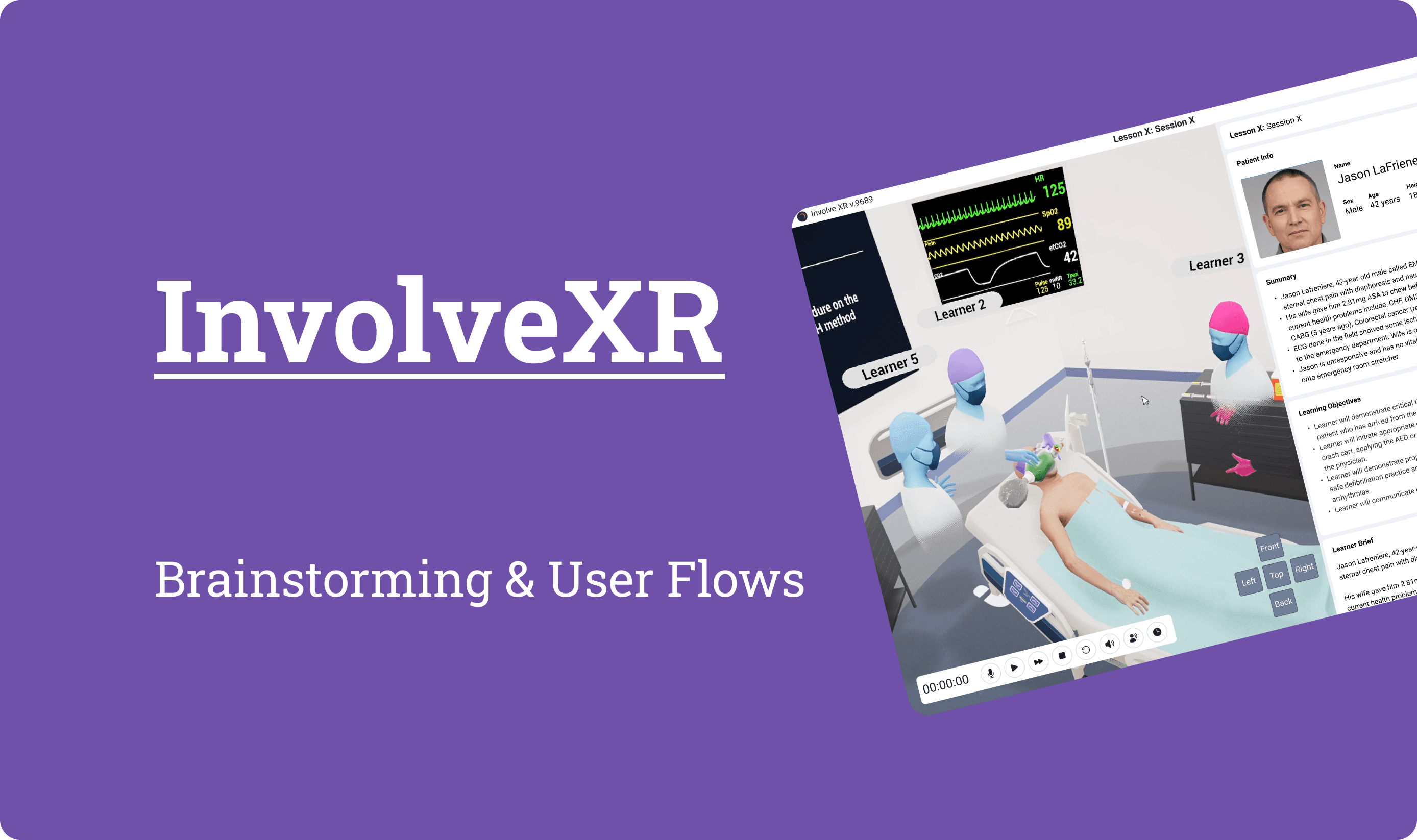
Lumeto’s immersive simulation lab, InvolveXR, uses VR to help healthcare learners practice clinical scenarios in realistic virtual environments. While this creates a powerful learning experience, the reliance on VR headsets limits accessibility and scalability for many institutions. As Lumeto expanded its platform, a key challenge emerged: how could the team bring the benefits of immersive simulation training to a broader audience using standard devices like laptops and tablets?
solution
To address this challenge, our team began exploring a screen-based version of InvolveXR that could bring simulation training to standard devices. I contributed to early UX exploration and system mapping to understand how VR interactions—such as patient communication, clinical assessments, and equipment use—could translate into a 2D interface while preserving the core learning outcomes of the simulation.
Nearing the end of my internship at Lumeto, I was heavily involved in the early exploration of InvolveXR, a new initiative aimed at expanding the reach of Lumeto’s VR healthcare training platform.
The project focused on adapting existing VR learning scenarios into a 2D screen-based experience, allowing healthcare institutions to access training content without requiring VR hardware. My work centered on early ideation, interaction translation, and collaborative planning around how immersive VR workflows could translate to traditional screen-based interfaces.
tl;dr
I helped kickstart the exploration of InvolveXR, a 2D learning platform that translates Lumeto’s VR healthcare training simulations into an accessible screen-based experience.
The existing platform
Lumeto’s VR system allowed healthcare trainees to enter immersive clinical scenarios where they could interact with patients, equipment, and environments in real time.
These simulations were designed to replicate real-world healthcare situations, helping learners develop decision-making and communication skills in a safe training environment.
However, the reliance on VR hardware meant the platform was best suited for institutions with dedicated VR setups.
Background Assumptions
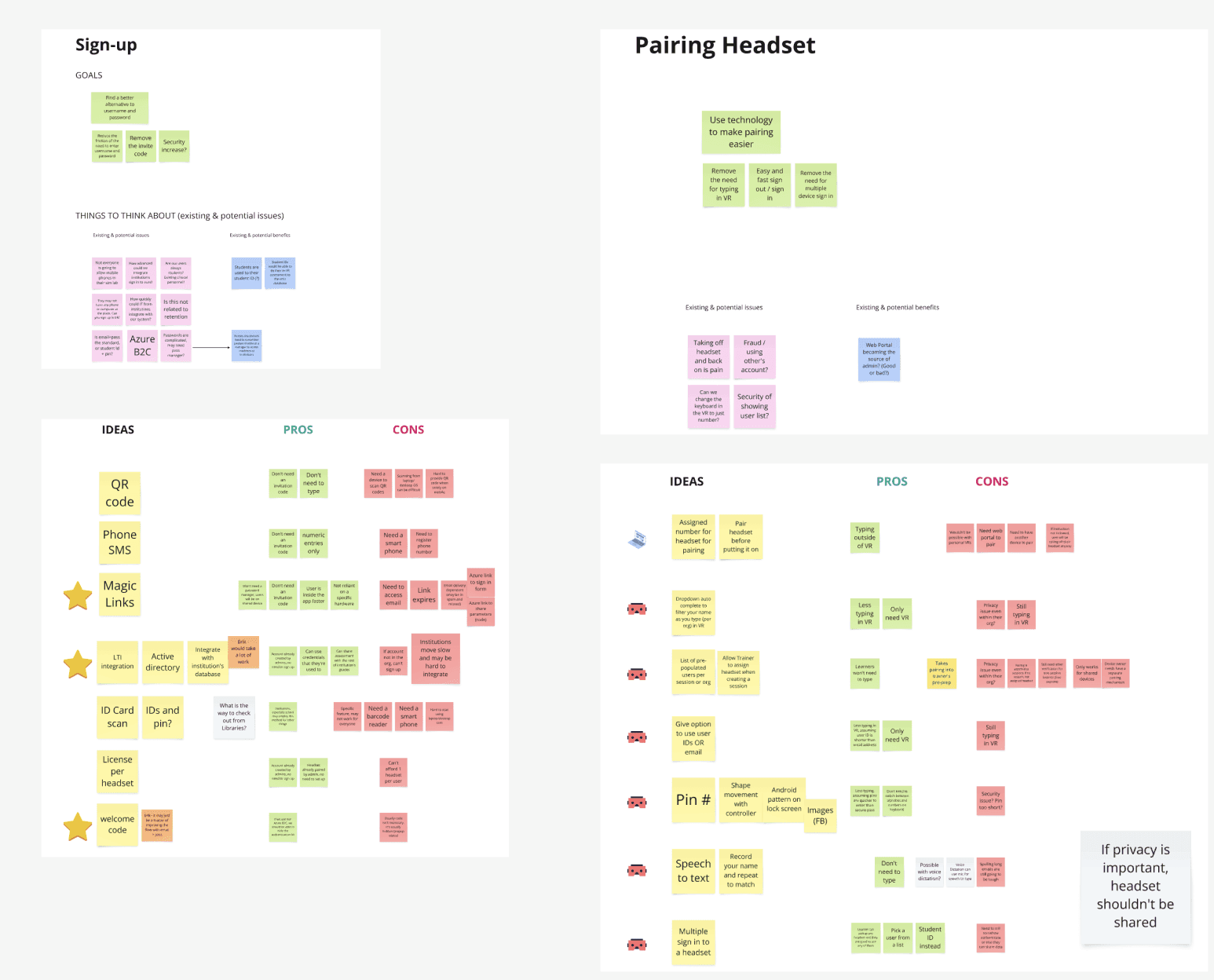
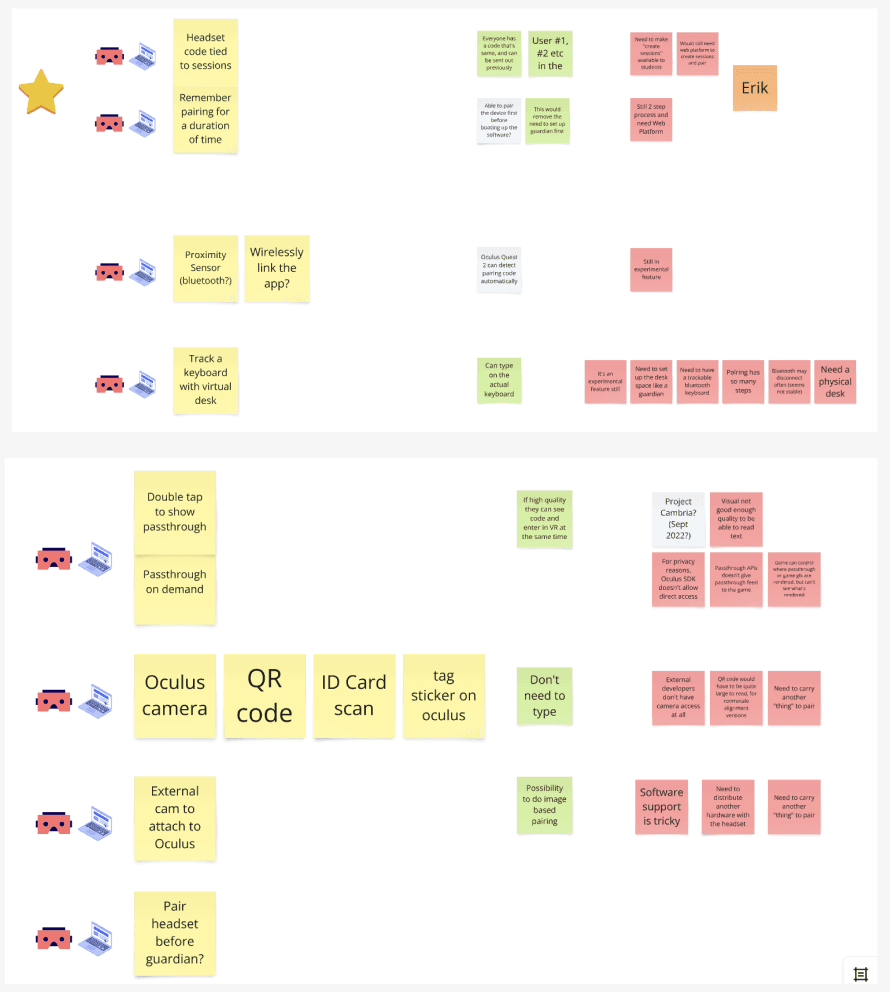
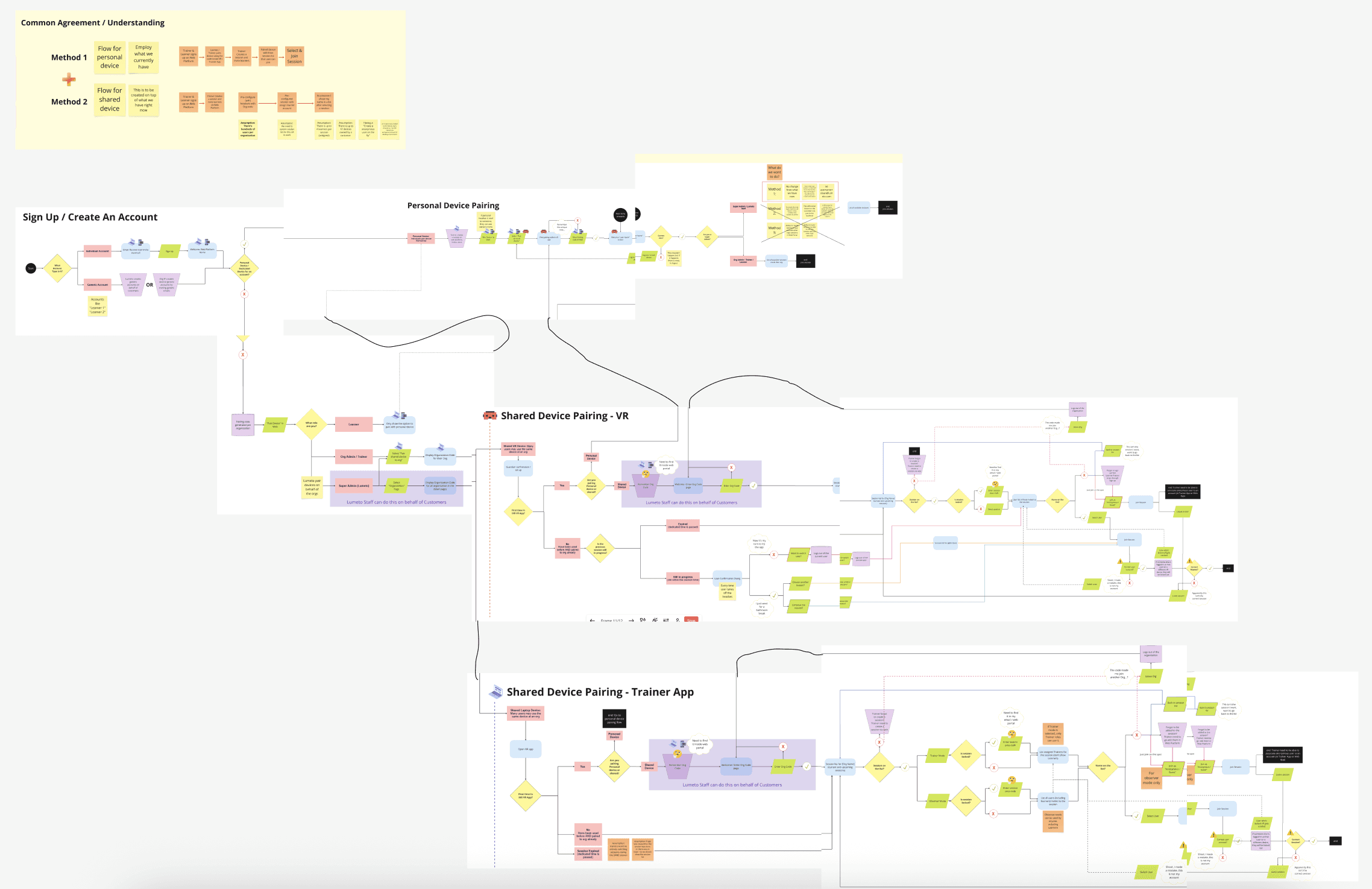
My team and I had multiple meetings to clearly lay out the assumptions, and to map out the most basic user flows that we would need.
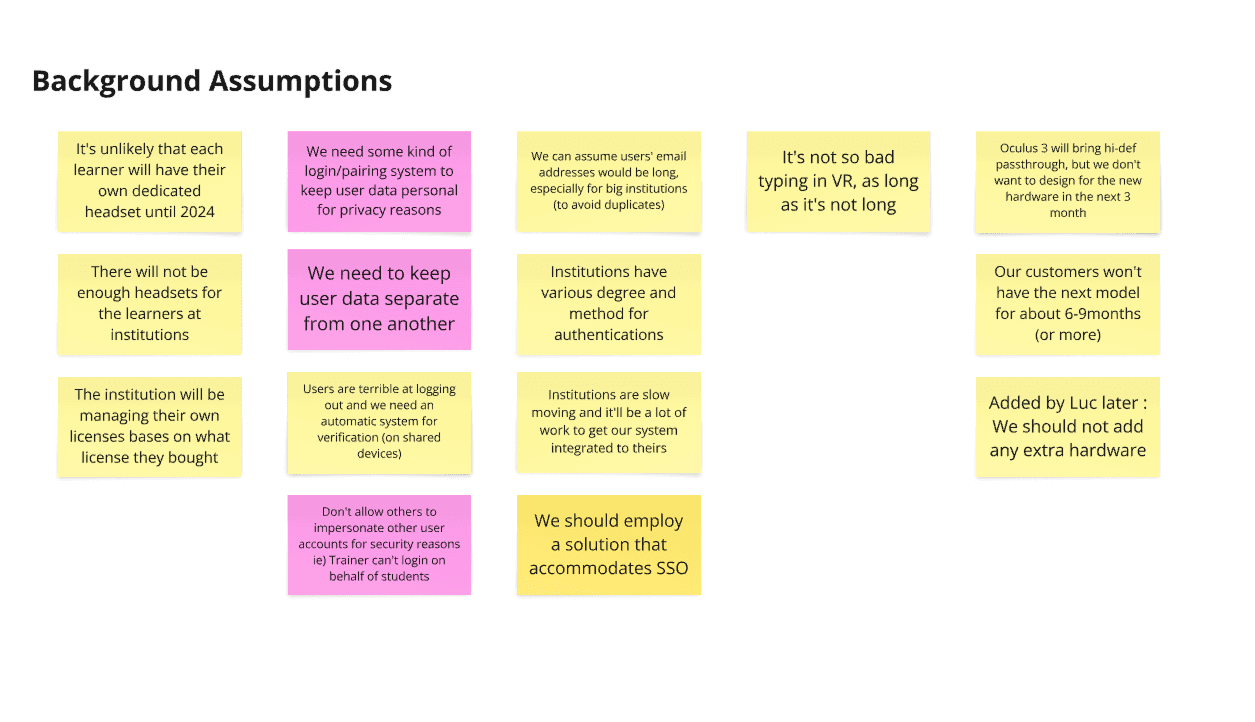
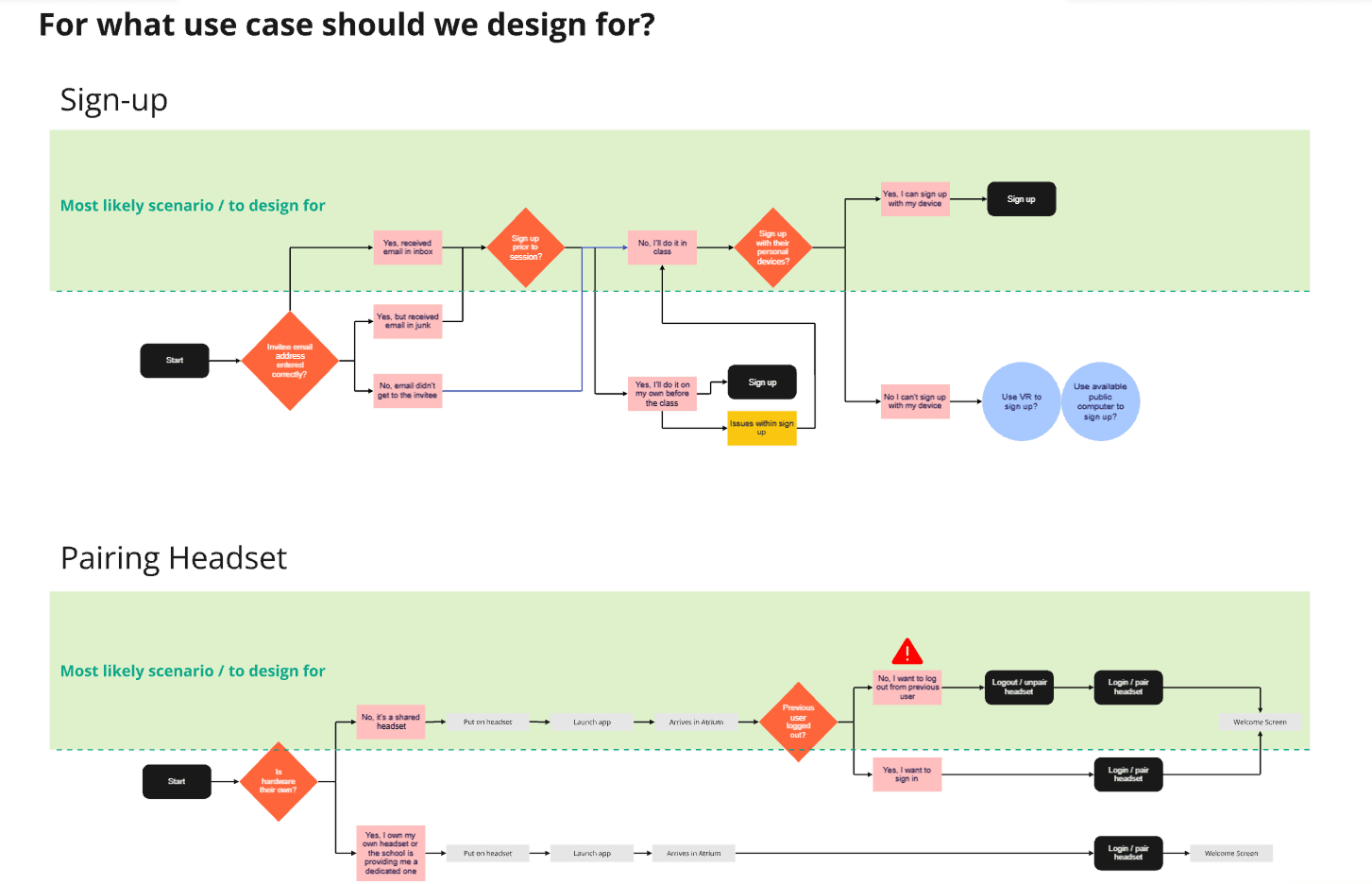
Many whiteboarding sessions occurred to gather everyones thoughts and ideas clearly, and these meetings were mainly run by myself and my manager. The first step was breaking down how the current VR experience worked.
In VR, users could:
• Look around environments naturally
• Physically move within a space
• Interact with objects using hand controllers
• Engage with patients through natural spatial interaction
We analyzed which of these interactions were essential to the learning experience and which could be redesigned for a screen-based interface.
Initial User Flows/Solutions
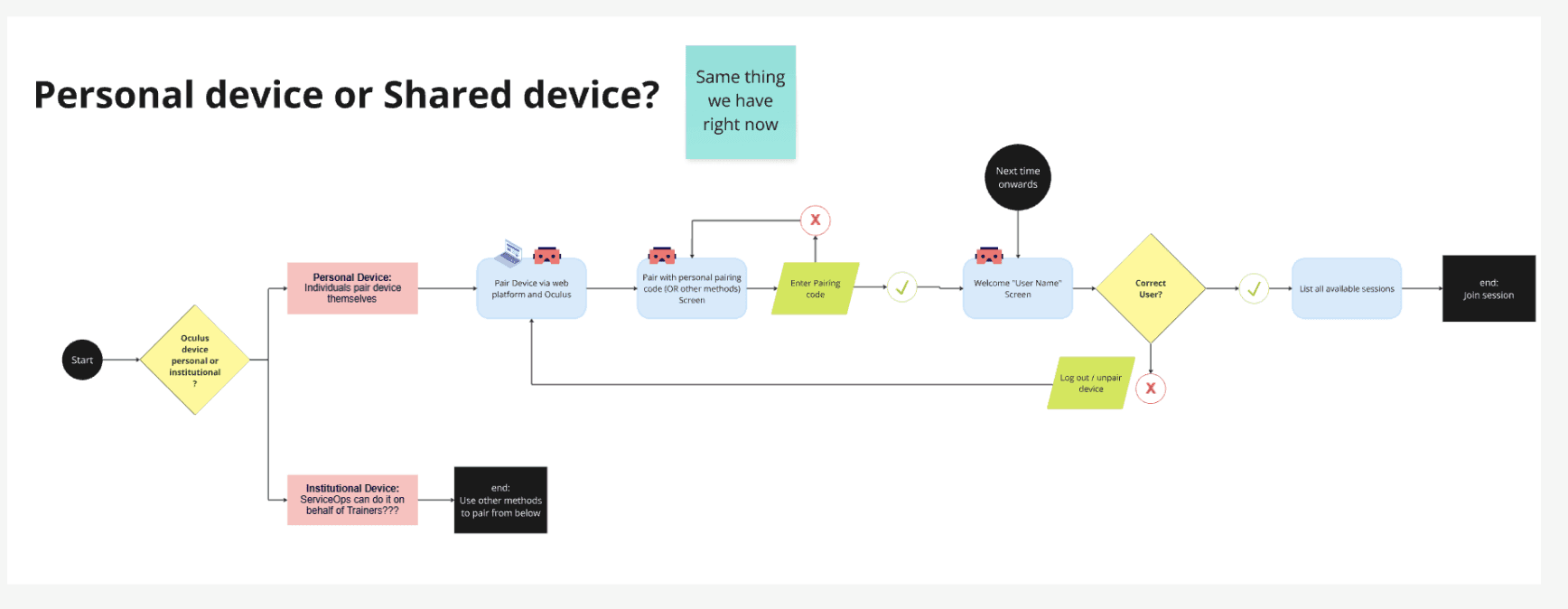
I began to create the possible final solutions, making early concept maps outlining how users would progress through a scenario within the 2D application. This included:
• navigation patterns
• scenario progression
• interaction mechanics
• UI overlays for feedback and guidance
These explorations helped shape the initial direction of the product.
Outcomes
The early design work around InvolveXR helped establish the conceptual foundation for a new product direction. By exploring how immersive simulations could be adapted for a traditional screen interface, we opened the door for Lumeto’s training platform to reach a significantly wider audience.
The project demonstrated how existing VR training content could evolve into a more accessible learning format while maintaining its educational impact.
Reflections
Working on InvolveXR taught me how challenging it is to translate interactions between entirely different mediums.
Designing for VR and designing for screens require fundamentally different assumptions about how users move, interact, and perceive information.
This project strengthened my ability to think at a systems level, understanding not just individual screens but how an entire experience evolves when the platform itself changes.
duration
april 2025
role
product designer
team
2 product designers, 1 product managers, 9+ developers
category
UI/UX